• +254 (0) 20 265 6947
  • pacida@pacida.org
  • Marsabit, Kenya
back top
Website Wash 1

Water, Sanitation & Hygiene

The main goal of this programme is to contribute towards improved health and quality of life and reduce poverty levels through provision of water and sanitation services to communities on a sustainable basis.

We also create community awareness on water related diseases; improve capacity for managing sanitation facilities, support appropriate solid and liquid waste management programs, use of suitable hygiene and sanitation approaches and messages for change of behaviour.

The Need: Marsabit is a rain-deficient county that largely relies on rain-dependent water systems. Frequent droughts coupled with the effects of climate change are resulting in decreasing amounts of available water county-wide. With no permanent rivers in the county, during the rainy season and early dry season, over 70% of the pastoralist population and their livestock rely on boreholes, pans, and shallow wells. Only 4% of the population has access to piped water.
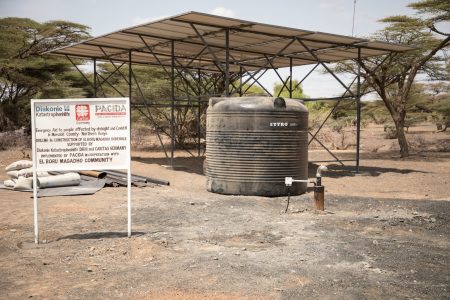
These sources quickly dry up with the onset of the dry season and the population has to rely on a limited number of high yielding boreholes, often at an average distance of about 30 km away. According to the Marsabit County Integrated Development Plan, 2013-2017, “most of the resources are used to take care of emergencies at the expense of longer-term development.”

Achievements In Numbers

Water supply systems established
0
Rainwater harvesting underground masonry tanks established
0
Major water treatment and supply system established
0
Boreholes for livestock domestic and irrigation purposes drilled
0
Water pans in the water-deficient areas constructed
0
Shallow wells rehabilitated and protected
0
Deep boreholes solarised
0
Chip-based pre-paid water systems established
0
Water management committees have had their capacity enhanced
0
Masonry storage tanks and livestock troughs constructed
0
Steel water tanks on strategic boreholes installed
0
Latrines established through CLTS approach
0
Villages have had their capacity in hygiene and sanitation enhanced
0